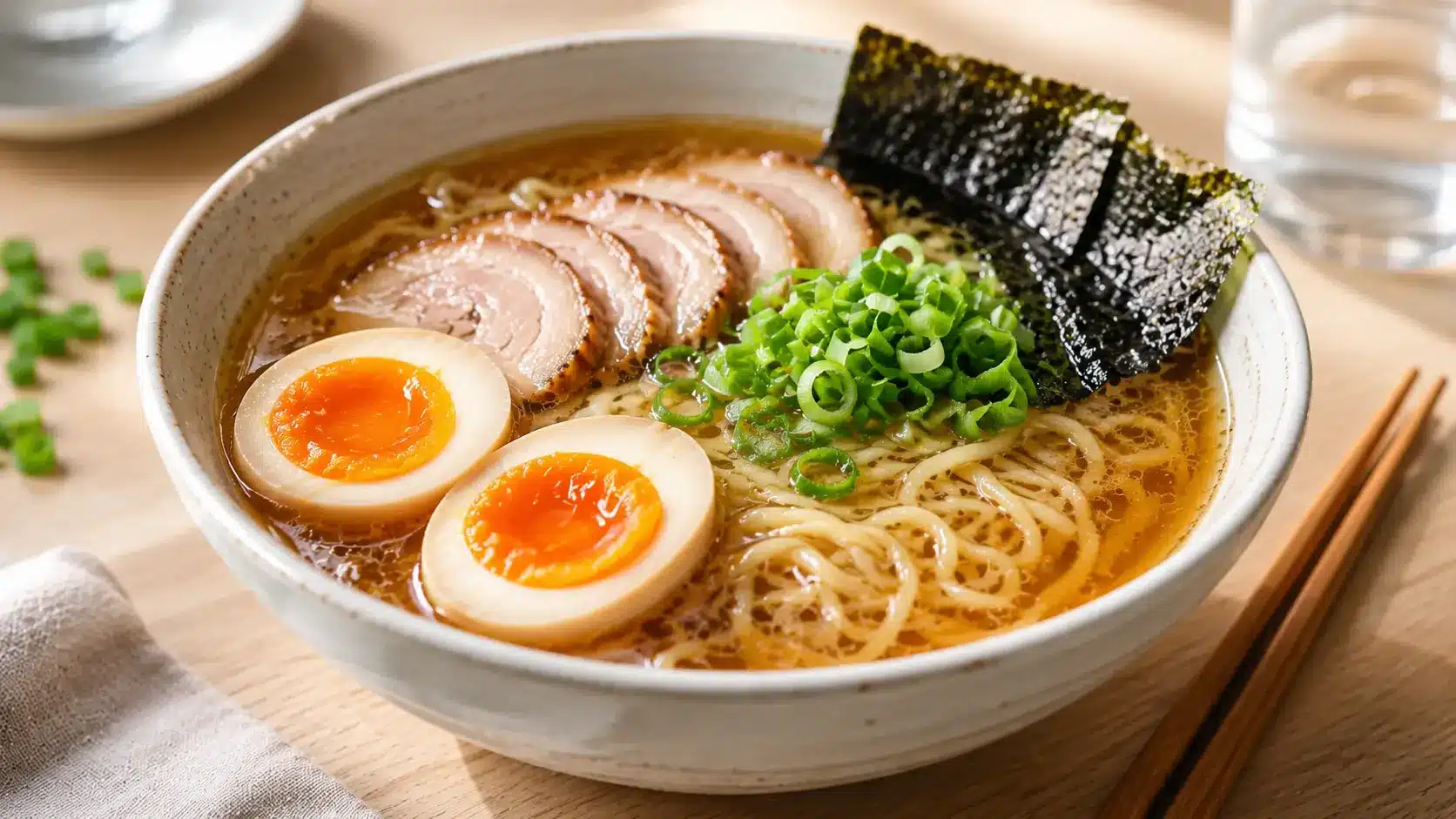
Ramen Broth Recipe is one of those kitchen projects that feels special without needing restaurant gear. You start with chicken bones, wings, aromatics, and dashi, then you let time do the quiet work. However, the real trick comes from gentle simmering, good skimming, and seasoning each bowl with tare instead of salting the whole pot. That method gives you clean flavor, flexible bowls, and broth you can freeze for busy nights. I also love this recipe because it fits real family life. You can start it on Sunday, chill it overnight, and turn it into dinner or lunch prep later in the week. For more cozy meal ideas, I’d pair this with the kind of simple planning you’ll find in the dinner recipes section.
Table of Contents
Ramen Broth Recipe
Ramen Broth Recipe Story, Flavor, and Family Comfort
Why This Ramen Broth Recipe Became My Rainy-Day Favorite
Hi, I’m Harper Lane, and this Ramen Broth Recipe reminds me of a rainy Sunday just outside Portland. The kids had left sneakers in the hallway, the dogs barked at every passing squirrel, and my kitchen smelled like ginger, garlic, and chicken bones. Years ago, I might have ordered takeout and called it good. However, after I inherited my grandmother’s cast iron skillet, I started chasing comfort in my own kitchen.
So, this Ramen Broth Recipe became one of my favorite Sunday rituals. First, I blanch the chicken carcasses and wings. Then, I rinse away dark bits under cold water. After that, I let the broth simmer gently with onion, scallions, ginger, garlic, and a splash of sake when I have it. Meanwhile, a jar of konbu, bonito, and dried shiitake sits in the fridge, building deep umami while I clean up lunch boxes and fold towels.
This Ramen Broth Recipe also helps me feed my family without turning dinner into a race. Once the broth finishes, I can make shoyu, miso, or shio bowls from the same pot. Plus, the broth freezes well, so I can save some for a cold night when everyone comes home tired. It also works beautifully for lunch prep ideas, especially when you keep noodles and toppings separate.
What Makes Homemade Ramen Broth Taste Deep and Clean
A great ramen bowl needs balance. You want body from chicken wings, savory depth from bones, sweetness from onion, and brightness from ginger and scallions. Then, dashi adds ocean-like savoriness and mushroom depth. Because of that, this broth tastes layered without feeling heavy.
Many cooks look for the Best Ramen Broth Recipe because restaurant ramen seems mysterious. However, this version keeps the method clear. You clean the chicken first, simmer gently, skim often, and avoid rough stirring. Those simple habits protect the broth’s clean taste. Then, you strain the broth and blend it with cold-soaked dashi.
I’m Harper Lane, and this Ramen Broth Recipe takes me right back to a rainy Sunday outside Portland. The dogs tracked mud through the kitchen, the kids argued over noodles, and my grandmother’s cast iron skillet sat on the stove like a reminder to slow down. I used chicken bones, wings, ginger, garlic, scallions, onion, and a cold-soaked dashi to build a broth that tasted cozy without feeling heavy. First, I blanched the chicken, then rinsed away every dark bit for a clean flavor. After that, I simmered it gently, skimmed often, and stirred in the overnight konbu, bonito, and shiitake dashi. Finally, I seasoned each bowl with tare instead of salting the whole pot. Add noodles, jammy eggs, greens, and sliced chicken. Suddenly, a busy house turns quiet for a few minutes, because everyone wants one more spoonful before homework, baths, and tomorrow’s lunch boxes begin again happily together.
PrintBest Ramen Broth Recipe
This Japanese ramen broth recipe combines slow-simmered chicken bones with an overnight dashi of konbu, bonito flakes, and dried shiitake mushrooms for a golden, silky, deeply savory broth that rivals any ramen restaurant. Season each bowl with your choice of shoyu, miso, or shio tare for a completely customizable bowl every time.
- Prep Time: 20 minutes
- Cook Time: 3 hours
- Total Time: 3 hour 20 minutes
- Yield: 8 servings 1x
- Category: Dinner
- Method: Stovetop Simmer
- Cuisine: Japanese
Ingredients
-
- For the Chicken Broth Base
- 2–3 chicken carcasses (or 1.5–2 kg total mixed chicken bones)
- 6–8 chicken wings (adds sweetness and body)
- 1 whole onion, peeled
- 3–4 scallions (green onions), cut into large pieces
- 1 thumb-size piece fresh ginger, sliced
- 4 cloves garlic, smashed
- 1/2 cup sake (optional; substitute with water)
- 3–4 liters cold water
-
- For the Overnight Dashi (Umami Boost)
- 10 g dried kelp (konbu)
- 10 g bonito flakes (or a bonito dashi stock bag)
- 20 g dried shiitake mushrooms (about 5 pieces)
- 1.5 liters cold water
-
- To Adjust and Finish
- Boiling water, as needed to adjust volume
- Optional Tare (Season in the Bowl, Not the Pot)
- Shoyu tare: 3 tablespoons soy sauce + 1 tablespoon mirin per batch
- Miso tare: 2 tablespoons miso paste + 1 teaspoon sesame paste + optional rayu chili oil
- Shio tare: 1 teaspoon fine sea salt + 2 tablespoons dashi per bowl
Instructions
-
- Quick blanch the chicken: Bring a separate pot of water to a boil. Add chicken carcasses and wings and poach for 30 seconds until the surface turns white. Drain immediately and discard the poaching water.
- Clean the chicken: Rinse all chicken pieces thoroughly under cold running water. Remove any coagulated blood and dark bits. This keeps the broth clear and clean-tasting.
- Start the main simmer: Place cleaned chicken and wings in a large stockpot. Add 3 to 4 liters of cold water. Bring to a boil over medium-high heat, then immediately reduce to a gentle simmer. Skim scum from the surface regularly during the first 30 minutes. Do not stir vigorously.
- Add aromatics: Add the peeled onion, scallions, sliced ginger, smashed garlic, and optional sake. Keep the heat at a gentle simmer and continue skimming as needed.
- Simmer the broth: Simmer gently for 3 hours for a clean, clear chicken broth. For deeper, richer flavor, simmer for 4 to 5 hours. Keep the broth barely moving to maintain clarity.
- Make the overnight dashi: In a large jar or container, combine konbu, bonito flakes, dried shiitake mushrooms, and 1.5 liters of cold water. Cover and soak in the refrigerator overnight (8 hours minimum). If short on time, soak at room temperature for 30 to 60 minutes.
- Strain the chicken broth: Pour the finished chicken broth through a fine mesh sieve and discard the solids. For extra clarity, strain a second time through a sieve lined with a paper towel.
- Combine and adjust: Pour the strained dashi into the chicken broth and stir gently. If the broth reduced too much, add boiling water to bring it back to volume. If it tastes thin, reduce gently for 10 to 20 more minutes.
- Season and serve: Place 2 to 3 tablespoons of your chosen tare (shoyu, miso, or shio) in each ramen bowl. Ladle hot broth over the tare and stir to combine. Add cooked ramen noodles and your choice of toppings. Serve immediately.
Notes
-
- Do not season the pot. Always season with tare in the individual bowl this allows one batch of broth to produce multiple different ramen styles.
- The broth keeps in the refrigerator for up to 5 days and freezes for up to 3 months. Store tare separately in a sealed jar for up to 2 weeks.
- For dumpling ramen, add steamed or pan-fried dumplings directly to the finished bowl alongside or instead of noodles.
- For a veggie ramen broth, skip the chicken entirely and build the broth from konbu, shiitake, dried mushrooms, and roasted vegetables.
- The chicken meat pulled from the carcasses after straining is excellent shredded as a ramen topping or added to fried rice.
Nutrition
- Serving Size: 1.5 cups
- Calories: 72
- Sugar: 1 g
- Sodium: 480 mg
- Fat: 3 g
- Saturated Fat: 0.8 g
- Unsaturated Fat: 2.2 g
- Trans Fat: 0 g
- Carbohydrates: 2 g
- Fiber: 0 g
- Protein: 9 g
- Cholesterol: 18 mg
Best Ramen Broth Recipe Ingredients and Smart Prep
Chicken Bones, Wings, Aromatics, and Dashi Basics
This Ramen Broth Recipe starts with two simple flavor teams: chicken broth base and overnight dashi. First, chicken carcasses and wings create body. Wings add sweetness and natural gelatin, so the broth feels silky. Then, onion, scallions, ginger, garlic, and sake bring aroma. Finally, dashi adds konbu, bonito, and dried shiitake flavor.
| Ingredient Group | Amount | Purpose |
|---|---|---|
| Chicken carcasses or mixed bones | 2–3 carcasses or 1.5–2 kg bones | Builds savory base |
| Chicken wings | 6–8 wings | Adds body and sweetness |
| Onion, scallions, ginger, garlic | As listed | Adds aroma and warmth |
| Konbu, bonito, shiitake, water | 10 g, 10 g, 20 g, 1.5 L | Adds umami boost |
For a cozy protein pairing, you can also serve sliced poultry on the side, much like the hearty style in this smoked turkey breast recipe. It gives guests another way to build a fuller bowl.
How Tare Turns One Broth Into Shoyu, Miso, or Shio Bowls
A strong Ramen Broth Recipe does not need heavy salt in the pot. Instead, tare seasons each bowl. This small step gives you choices. For a shoyu tare, mix soy sauce with mirin and a little konbu soy sauce. For miso ramen broth, stir miso paste with aromatics and optional rayu chili oil. For shio tare, blend salt with a little dashi.
This approach also helps families with different tastes. One child can choose soy sauce depth. Another can choose gentle miso. Meanwhile, you can keep the base broth clean for tomorrow. If you want a Japanese Ramen Broth Recipe that stays flexible, tare gives you that freedom.
What makes this ramen broth recipe taste so deeply satisfying is actually rooted in chemistry. Glutamic acid and inosine acid naturally boost each other when combined, producing that full, lingering savoriness we call umami. Harvard’s School of Public Health identifies this interaction as the core reason umami flavor hits so hard and feels so complete.
Japanese Ramen Broth Recipe Cooking Method
Clean the Chicken First for a Clear Broth
This Ramen Broth Recipe depends on one key move: clean the chicken before the main simmer. First, bring a separate pot of water to a boil. Then, poach the chicken carcasses and wings for 30 seconds, just until the surface turns white. Next, drain everything and throw away that water.
After that, rinse the chicken under cold running water. Use your fingers to remove coagulated blood and dark bits. Although this step takes a few extra minutes, it pays you back with a cleaner taste. Also, it helps the broth stay clearer.
Now place the cleaned chicken and wings in a large stock pot. Add 3–4 liters of cold water. Bring it to a boil, then lower the heat right away. Keep the surface barely moving. As foam rises, skim it often. Do not stir hard. Because rough movement clouds the broth, gentle heat works best.
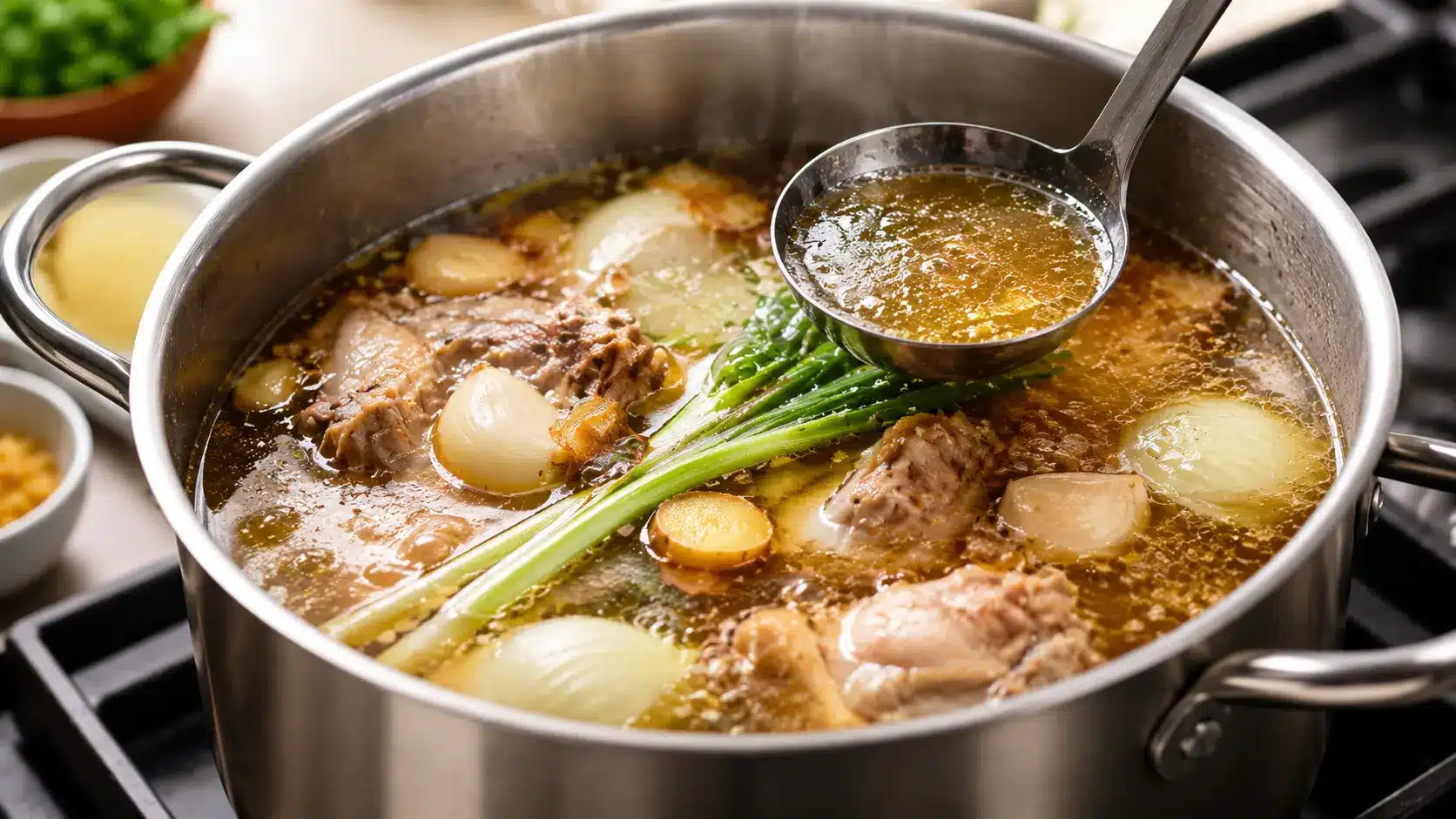
This method gives you a clean base for shio, miso, and a shoyu ramen broth recipe. It also suits chicken ramen noodle recipes when you want a broth that tastes rich but not greasy.
Simmer Gently, Strain Carefully, and Add Dashi
Once the broth settles into a gentle simmer, add onion, scallions, ginger, garlic, and optional sake. Then continue to skim when needed. Simmer for about 3 hours for a clean chicken version. However, simmer 4–5 hours when you want deeper flavor.
Meanwhile, make the dashi. In a large jar, combine 10 g konbu, 10 g bonito flakes, 20 g dried shiitake, and 1.5 liters water. Cover the jar and chill it overnight. If you forget, soak it for 30–60 minutes the same day. Still, overnight gives the best taste.
After the chicken broth finishes, strain it through a fine mesh sieve. For extra clarity, strain it again through a sieve lined with kitchen paper towel. Then add the dashi to the strained chicken broth. This creates a combination broth with chicken depth and dashi savoriness.
If the broth reduced too much, add boiling water to adjust the volume. However, if it tastes thin, simmer it gently for 10–20 minutes. That final reduction strengthens the Best Ramen Broth Recipe without muddying the flavor.
Ramen Broth Serving, Storage, and Easy Variations
Bowl Assembly, Toppings, and Noodle Pairings
To serve this Ramen Broth Recipe, warm each bowl first. Then add tare to the bottom of the bowl. Ladle in hot broth and stir. Next, add cooked noodles, then toppings. Try jammy eggs, sliced chicken, scallions, corn, bamboo shoots, mushrooms, chili oil, sesame seeds, or bok choy.
For dumpling ramen, place pan-seared dumplings on top right before serving. They add crisp edges, savory filling, and a fun dinner-table moment. For veggie ramen broth, skip the chicken base and build a vegetable stock with mushrooms, onion, ginger, garlic, konbu, and dried shiitake. Then add the same tare choices.
This Ramen Broth also works for casual gatherings. You can set out noodles, broth, tare, and toppings like a ramen bar. If you like game-day spreads, pair it with something snackable from the smoked buffalo chicken dip recipe. and let guests build their own bowls.
Freezer Tips, Fast Options, and Flavor Fixes
Let leftover broth cool, then store it in airtight containers. Keep it in the fridge for up to 4 days or freeze it for up to 3 months. Also, freeze it in 2-cup portions for fast weeknight bowls. When you reheat it, bring it to a simmer, then season each bowl with tare.
Can you make this Ramen Broth Recipe fast? Yes, but the flavor changes. For a quicker bowl, simmer cleaned wings with aromatics for 60–90 minutes, then add same-day dashi. It will taste lighter, but it still beats plain boxed stock.
If the broth tastes flat, add more tare to the bowl. If it tastes too salty, add unsalted hot broth or boiling water. If it lacks body, reduce it gently. Finally, if it tastes too heavy, add a little extra dashi. Because you season in the bowl, you can fix each serving without changing the whole pot.
Worth noting before you cook: ingredients like bonito and soy sauce in this ramen broth recipe are both listed among the major food allergens recognized by the U.S. Food & Drug Administration. When preparing this for guests with sensitivities, take a moment to check every label before anything goes into the pot.
HARPER LANE AUTHOR BIO
Hi, I’m Harper Lane, a private chef and meal planning consultant based just outside Portland, Oregon. My kitchen is loud dogs barking, kids shouting, pans sizzling and I wouldn’t change a thing. I started cooking seriously after inheriting my grandmother’s cast iron skillet, and that shift led me from an advertising career to night classes and eventually to cooking for families full-time. I build recipes around real life: things you can prep on Sunday, freeze easily, and enjoy on the busiest nights. My goal is always the same a good meal shared together makes any day better.
FREQUENTLY ASKED QUESTIONS
How to Make Ramen Broth Recipe?
Start by blanching chicken carcasses and wings in boiling water for 30 seconds, then rinse under cold water. Add cleaned bones to a large stockpot with cold water, bring to a boil, reduce to a gentle simmer, and skim the surface. Add onion, scallions, ginger, garlic, and optional sake. Simmer for 3 to 5 hours. Separately, cold-soak konbu, bonito flakes, and dried shiitake in water overnight to make dashi. Strain the chicken broth, combine with the dashi, adjust seasoning with your chosen tare in each bowl, and serve immediately with noodles and toppings.
What Is the Difference Between Chicken Broth and Ramen Broth?
Regular chicken broth is typically seasoned during cooking and meant to be used as a base ingredient in a wide range of dishes. Ramen broth is a specialized, unseasoned stock designed specifically to work with a separate tare system, and it often includes a dashi layer for added umami. Ramen broth also relies on a longer, gentler simmer to extract collagen from bones, giving it a silky texture that standard chicken broth doesn’t usually achieve.
What Ingredients Are Needed to Make Ramen Broth?
The core ingredients for a chicken-based ramen broth recipe are chicken carcasses, chicken wings, onion, scallions, ginger, garlic, and water. The dashi layer adds konbu, bonito flakes, and dried shiitake mushrooms. The tare added separately in each bowl can be shoyu (soy sauce and mirin), miso paste, or shio (salt and dashi). Optional sake added during the simmer improves the depth and clarity of the finished broth.
How Long to Cook Ramen Broth?
Simmer ramen broth for a minimum of 3 hours for a clean, clear chicken broth. For deeper flavor and a richer, more silky texture, extend the simmer to 4 or 5 hours. The dashi component requires no cooking at all just an overnight cold soak in the refrigerator. If using a pressure cooker, 60 to 90 minutes at high pressure produces a very good result.
Can You Make Ramen Broth Fast?
Yes. A pressure cooker reduces the active cooking time to 60 to 90 minutes. You can also upgrade store-bought chicken stock in about 30 minutes by simmering it with aromatics and dried shiitake. In both cases, prepare the overnight dashi soak the day before to add the umami layer without any extra cooking time on the day.
What Broth Is Best for Ramen?
A combination broth chicken stock layered with Japanese dashi produces the most balanced and deeply flavored ramen broth. The chicken provides body and sweetness while the dashi adds savory umami complexity. Among tare styles, the best choice depends on personal preference: shoyu tare is classic and versatile, miso tare is rich and warming, and shio tare lets the pure broth flavor stand front and center.
CONCLUSION
A great ramen broth recipe takes patience, but it never asks for perfection. The first time you lift a bowl and smell that golden, savory broth, you’ll understand why ramen shops in Japan spend years perfecting theirs. This recipe gives you a genuinely remarkable version you can make in your own kitchen, with ingredients that are easy to find and techniques that become second nature after the first try.
Start with a proper blanch. Keep the simmer gentle. Make the dashi the night before. Season in the bowl, not in the pot. Those four habits will produce the best ramen broth recipe you’ve ever made at home, every single time.
Find even more warming bowls and weeknight favorites in the dinner category at All Meals Recipes.
Follow me on Pinterest for daily new recipes.