
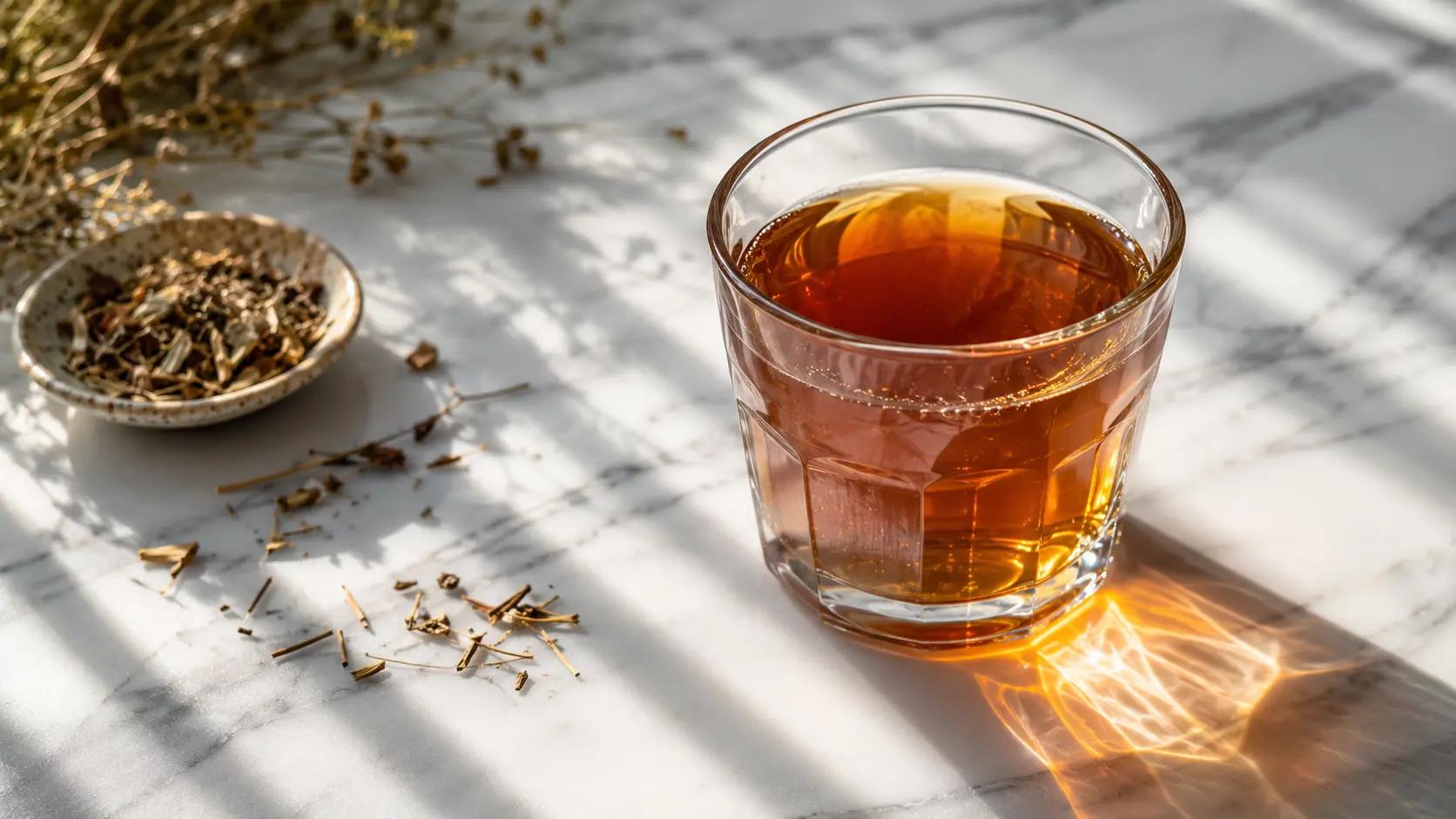
The first time I tried an essiac tea recipe, I was standing in my grandmother’s Blue Ridge kitchen on a gray November morning, watching her move through the steps like she had done it a hundred times before. The herbs simmered in a heavy pot, and the scent deep, earthy, faintly bitter curled through the whole house like something ancient finding its place again. She never rushed it. She always said the overnight steep was the secret nobody told you about.
If you’ve been curious about how to make an Essiac tea recipe at home, you’re in the right place. This guide follows the classic four-herb blend, walks you through every step, shares a few personal notes from my own batches, and covers the variations worth trying. Whether you’re a first-time brewer or someone who’s tried it before without great results, the tips below will help you get a smooth, balanced, deeply herbal cup every time.
In a lab setting, researchers found that an Essiac tea preparation helped neutralize reactive oxygen species and slow lipid peroxidation, pointing to antioxidant potential from the plant compounds found in the herbal blend. [Source]
Table of Contents
Essiac Tea Recipe
The Story Behind This Essiac Tea Recipe
A Blue Ridge Kitchen Memory
My grandmother kept dried herbs in small paper bags, folded at the top and labeled in her own handwriting. Burdock root. Sheep sorrel. Slippery elm. Turkey rhubarb. She kept them on the same shelf as her canning jars and a well-worn copy of a herbal almanac. To her, making an Essiac tea recipe wasn’t a trend or a project it was just something you did in the same steady way you made broth or put up preserves.
I remember watching the water darken as the herbs released their color. It never turned black. It deepened to a warm amber-brown, the way good tea should. She’d turn off the heat and leave the pot on the back of the stove overnight, covered with a cloth. By morning, the house still smelled faintly of it root and bark, something grounding.
I didn’t appreciate it much as a kid. It was too earthy, too slow, too serious. It wasn’t until my late twenties, when I started keeping my own kitchen and looking for rituals that felt real, that I went back to that shelf in her house and copied down the recipe she’d never bothered to write out properly.
Why This Herbal Brew Still Feels Special
There’s something about making an Essiac tea recipe from scratch that feels different from dropping a tea bag into a mug. The process has weight. You measure the herbs carefully. You watch the simmer. You wait overnight. You strain it with intention. The result is a tea that tastes like effort and patience in the best possible way.
This brew has been circulating in North American herbal traditions for over a century. The four-herb blend popularized by Canadian nurse René Caisse in the 1920s draws on a combination with roots in Ojibwa herbal knowledge. The preparation is simple but specific, and the details matter: grind size, simmer time, steep length, straining method. Get those right, and the flavor is remarkable. Earthy and clean, with a faint tang from the sheep sorrel and a smooth finish from the slippery elm.
That’s what this article is here to help you get right.
PrintEssiac Tea Recipe — Classic Four-Herb Method

Essiac tea recipe made easy with 4 herbs, slow steeping tips, storage notes, and gentle serving ideas.
- Prep Time: 10 minutes
- Steep time: 12 hours (overnight)
- Cook Time: 10 minutes
- Total Time: 12 hours 20 minutes
- Yield: 1 quart (4 cups) 1x
- Category: Herbal Tea
- Method: Simmer, Steep, Reheat
- Cuisine: Traditional Herbal
- Diet: Vegan
Ingredients
- 1 oz burdock root, coarse cut
- 0.75 oz sheep sorrel
- 0.25 oz slippery elm bark
- 0.0625 oz turkey rhubarb
- 1 quart (4 cups) filtered or spring water
Optional additions:
- 2–3 slices fresh ginger (for ginger version)
- Honey or lemon for serving
- Ice and mint for cold version
Instructions
- Measure all four herbs by weight using a kitchen scale. Verify that herbs smell fresh and earthy. Use coarse-cut herbs only no powder.
- Bring one quart of water to a full rolling boil in a heavy-bottomed covered pot.
- Add all four herbs to the boiling water. Cover the pot immediately, reduce heat to low, and simmer gently for 10 minutes.
- After 10 minutes, turn off the heat. Do not uncover the pot. Allow the tea to steep undisturbed for 8 to 12 hours (overnight is ideal).
- The following morning, reheat the tea over low heat until just steaming — do not boil.
- Strain through fine muslin or cheesecloth into sterilized glass jars. Press herbs gently to extract all liquid.
- Cap the jars and refrigerate immediately.
- Serve warm or chilled. Keeps refrigerated for up to two weeks.
Notes
- Herb grind size matters: coarse cut only. Powdered herbs create cloudiness and bitterness.
- The overnight steep is not optional it is what gives the tea its smooth, integrated character.
- Never boil after the initial simmer; gentle reheating preserves the aromatic quality.
- For the ginger version, add fresh ginger slices during the simmer stage.
- For cold brew, refrigerate the finished tea for 6 hours and serve over ice.
- Do not freeze; freezing damages aroma and texture.
- Consult a healthcare provider before consuming regularly if you take medications or have health conditions.
Nutrition
- Serving Size: 1 cup
- Calories: 2
- Sugar: 0 g
- Sodium: 1 mg
- Fat: 0 g
- Saturated Fat: 0 g
- Unsaturated Fat: 0 g
- Trans Fat: 0 g
- Carbohydrates: 0 g
- Fiber: 0 g
- Protein: 0 g
- Cholesterol: 0 g
Essiac Tea Recipe Ingredients and Ratios
The Classic Four-Herb Blend
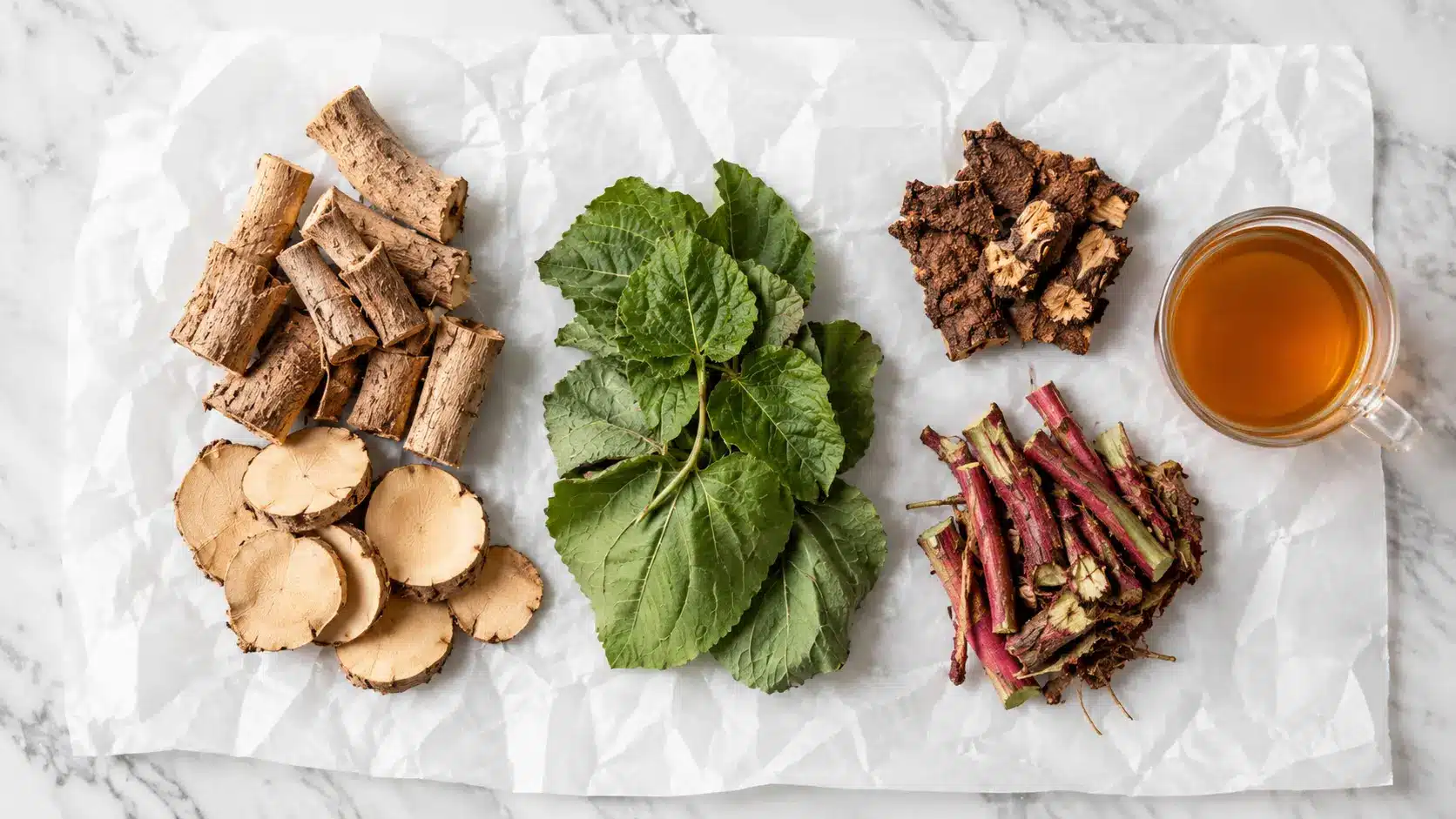
The traditional Essiac tea recipe uses four herbs in carefully proportioned ratios. Each one plays a distinct role in the final flavor and texture of the brew. Here’s what you need for one quart of finished tea:
Burdock Root — 1 oz This is the backbone of the blend. Burdock gives the tea its deep, warming earthiness the flavor you notice first and remember longest. Use a coarse cut, never a fine powder. Whole cut burdock root releases its character slowly and cleanly during the simmer. If you can source it fresh, double the amount, since fresh root holds more moisture than dried.
Sheep Sorrel — 0.75 oz Sheep sorrel is what brightens the blend. It carries a clean, faintly lemony tang that cuts through the heavier earthiness of the burdock and gives the tea a lively quality. In old European and Indigenous herbal traditions, sheep sorrel was valued for its acidity and its bite. There’s no perfect substitute mild spinach can add body in a pinch, but the brightness won’t be the same.
Slippery Elm Bark — 0.25 oz This is the ingredient that gives Essiac its distinctive smooth, silky mouthfeel. Slippery elm contains natural mucilage, a substance that coats the liquid with a soft, almost velvety texture. Early North American communities used it widely for its comforting quality. If you have an elm allergy, you can omit it and increase the burdock slightly, but you’ll notice the difference in texture.
Turkey Rhubarb — 0.0625 oz (approximately 1/16 oz) Turkey rhubarb is potent. You use very little of it barely a trace by weight because its sharp, almost bitter character can overwhelm the whole blend if overdone. Its use in this recipe traces back to old apothecary traditions, where small amounts of strong herbs balanced richer, heavier ones. Measure it carefully. There is no substitution; keep the amount precise.
| Herb | Amount | Role in the Blend |
|---|---|---|
| Burdock root | 1 oz | Earthy base, warming depth |
| Sheep sorrel | 0.75 oz | Bright tang, lively lift |
| Slippery elm bark | 0.25 oz | Smooth, silky mouthfeel |
| Turkey rhubarb | 0.0625 oz | Sharp balance, very strong |
Substitutions, Safety Notes, and Herb Quality
On herb quality: This matters more than most people expect. Old, stale herbs produce a flat, muted brew with none of the aroma that makes an Essiac tea recipe worth making. When you open your herb packets, they should smell fresh earthy, slightly sweet, alive. If they smell like nothing or like dust, replace them. Store dried herbs sealed tightly, away from heat, light, and humidity.
On water quality: Use spring water or filtered water. Tap water with heavy chlorine or mineral content can interfere with how the herbs extract and may introduce off-flavors. This is a small detail that makes a noticeable difference.
On safety and personal circumstances: Turkey rhubarb and sheep sorrel are potent herbs. If you take prescription medications, are pregnant, nursing, or have a health condition being managed by a professional, check in with your provider before brewing this regularly. The recipe is traditionally made and widely shared, but individual responses to concentrated herbal infusions vary. When in doubt, ask someone who knows your health history.
How to Make Essiac Tea Recipe at Home
Simmer, Steep, Strain, and Bottle
Making an Essiac tea recipe at home comes down to four core steps: a short simmer, a long overnight steep, a careful strain, and a clean bottle. Nothing here is complicated, but the sequence matters. Skipping the overnight steep is the most common mistake people make, and it shows in the flavor the tea tastes thin and sharp rather than smooth and full.
Here’s the complete method, step by step:
Step 1: Prepare your herbs Measure each herb by weight, not volume a kitchen scale is essential for accuracy, especially with the turkey rhubarb. The grind should be coarse, not powdered. Powdered herbs make the tea murky, gritty, and difficult to strain cleanly. Your herbs should smell fresh and earthy when you open them. That aroma is your first quality checkpoint.
Step 2: Bring water to a boil Pour one quart (four cups) of filtered or spring water into a heavy-bottomed pot. Bring it to a full rolling boil over medium-high heat.
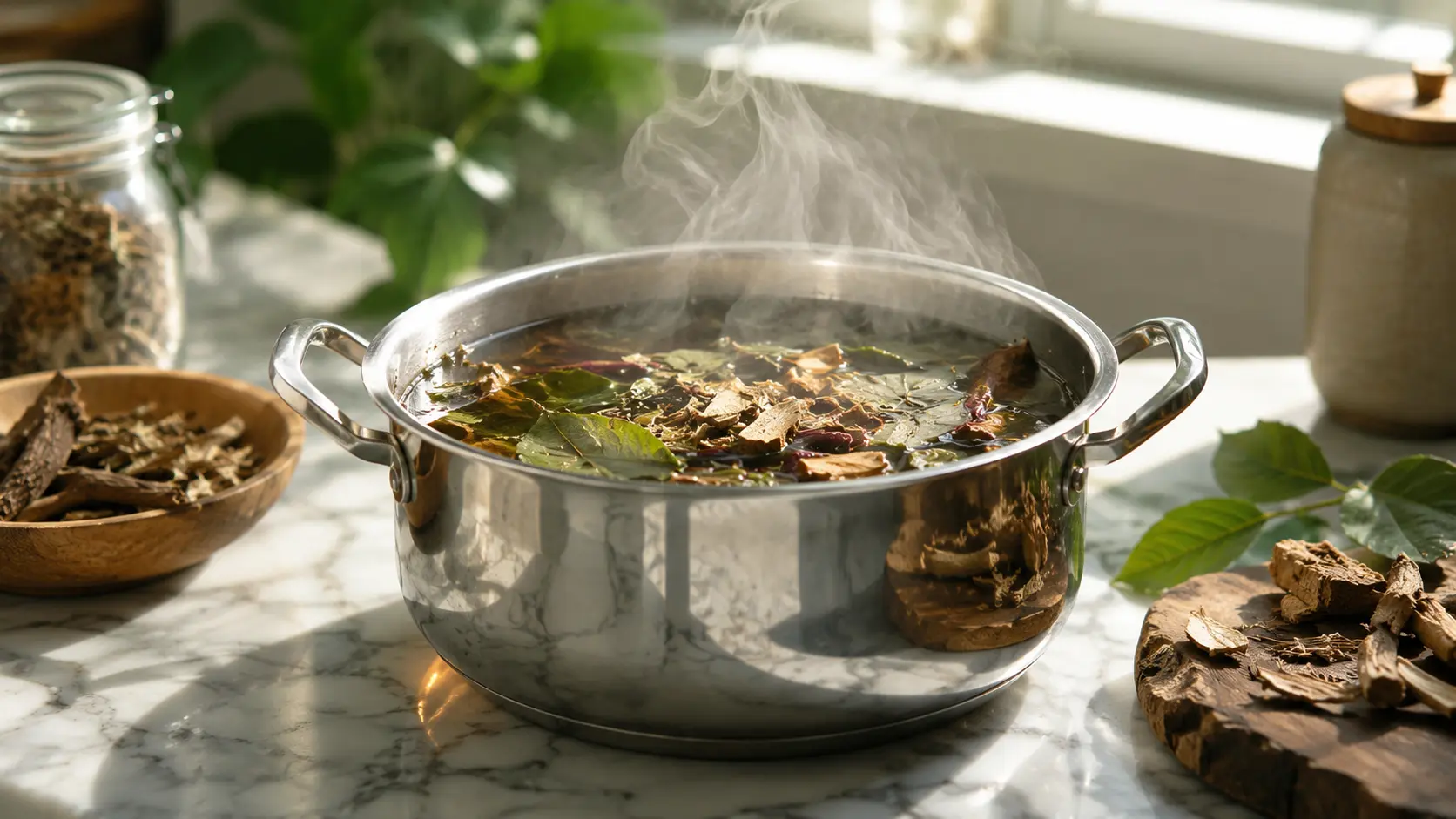
Step 3: Add herbs and simmer Add all four herbs to the boiling water. Cover the pot immediately, reduce the heat to low, and simmer gently for 10 minutes. Keep it covered throughout. The water should darken gradually to a warm amber-brown not black, not pale. Black means overheating; pale means the herbs need more time. That amber-brown is your color checkpoint.
Step 4: Steep overnight — do not skip this After 10 minutes of simmering, turn off the heat. Do not remove the cover. Leave the pot on the stove to steep undisturbed for 8 to 12 hours. Overnight is ideal. This long steep is what draws out the slippery elm’s mucilage and allows all four herbs to fully integrate. The tea after steeping should feel smooth and have a gentle, settled aroma not sharp, not gritty.
Step 5: Reheat and strain The next morning, gently reheat the tea over low heat until it is just steaming never boiling. Strain it through a fine mesh cloth (cheesecloth or muslin works well) into sterilized glass jars. Press the herbs gently to extract any remaining liquid, then discard the solids.
Step 6: Bottle and refrigerate Cap the jars and refrigerate immediately. Your finished Essiac tea recipe will keep for up to two weeks in the refrigerator.
Flavor Checkpoints for a Smooth Brew
Even if you follow every step, it helps to know what to look and taste for at key moments during the process. These checkpoints will tell you whether your batch is on track:
Aroma at the start: Your dry herbs should smell fresh and earthy when measured. If there’s no aroma, the herbs are too old.
Color at the simmer: Warm amber-brown after 10 minutes on low heat. If it looks too pale, simmer another two to three minutes with the lid on. If it looks very dark or almost black, your heat was too high.
Texture after steeping: Run a clean spoon through the cooled tea. It should feel faintly smooth and silky not gritty, not watery. That smooth quality comes from the slippery elm.
Final taste: The finished tea should be earthy and deep, with a gentle tang from the sheep sorrel and a smooth finish. If it tastes very bitter or sharp, the herbs may be too finely ground or the simmer ran too long. If it tastes flat or weak, the herbs were likely stale.
Essiac Tea Recipe Variations, Storage, and Serving
Classic, 8-Herb, Ginger, and Cold Versions
The traditional four-herb Essiac tea recipe is the place to start it’s clean, balanced, and closest to the original. But once you’re comfortable with the base preparation, there are several variations worth exploring.
Classic 4-Herb Version This is what this entire article is built around. Burdock, sheep sorrel, slippery elm, turkey rhubarb. Earthy, smooth, deeply herbal. The simplest to prepare and the most traditional in flavor. This is where every first-time brewer should begin.
8-Herb Modern Blend The expanded version adds blessed thistle, kelp, red clover, and watercress to the original four. The resulting flavor is more botanical and slightly sharper some people love it for that complexity, others prefer the cleaner simplicity of the classic blend. The preparation method is identical; you simply add the four additional herbs in proportions suggested by your source blend. Expect the color to deepen and the aroma to become more layered.
| Version | Herbs | Flavor Profile | Best For |
|---|---|---|---|
| Classic 4-herb | Burdock, sorrel, slippery elm, rhubarb | Earthy, smooth, clean | First-timers, traditional brew |
| 8-herb modern | Classic 4 + blessed thistle, kelp, red clover, watercress | Botanical, sharper, complex | Those who enjoy herbal depth |
Ginger-Infused Version Add two to three thin slices of fresh ginger to the pot during the simmer stage. Ginger brings a warm, spiced note that plays well against the earthiness of the burdock and softens the tang from the sheep sorrel. This version is especially good served warm on cold mornings.
Cold Brew Essiac Prepare the tea using the standard method, then refrigerate the finished, strained batch for at least six hours before serving. Pour over ice with a slice of lemon or a few fresh mint leaves. This version is refreshing, lighter-tasting, and an excellent way to enjoy the brew in warmer months. The cold presentation makes the flavor feel less intense and more approachable for people trying it for the first time.
Essiac Ginger Mocktail Take one cup of chilled, strained Essiac tea. Add a splash of fresh ginger juice, a small amount of honey, and pour over ice. This version is clean, herbal, slightly sweet, and genuinely pleasant as a non-alcoholic beverage at any hour of the day.
You might also see herbal-style drinks such as this Pulhia Tea Recipe, which many readers mention in everyday wellness drink discussions.
How to Store and Serve It
Refrigerator storage Finished Essiac tea keeps for up to two weeks in the refrigerator when stored in sterilized glass jars with tight-fitting lids. Always let the tea cool to room temperature before refrigerating, and make sure your jars are clean and sterile before bottling to prevent early spoilage.
Avoid freezing Freezing damages the herbal aroma and changes the texture noticeably. The silky quality from the slippery elm does not survive well through freeze-thaw cycles. Stick to refrigerator storage and make smaller batches more frequently if you prefer the freshest possible flavor.
Reheating Warm refrigerated Essiac tea recipe over low heat until just steaming. Do not boil. Boiling after the initial preparation will drive off the lighter aromatic compounds and make the tea taste flat and bitter. Low and slow is the rule.
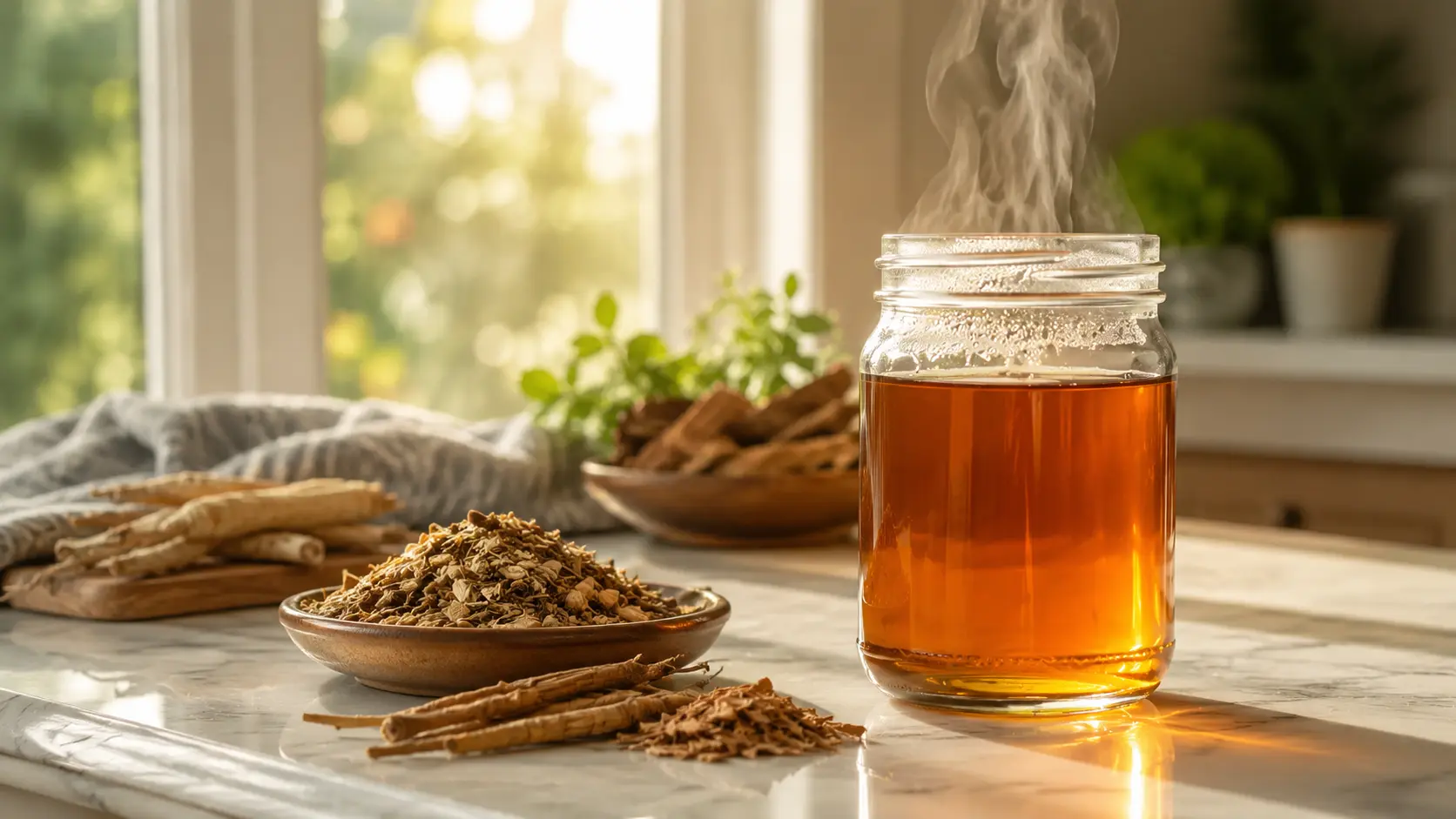
Serving suggestions Many people enjoy Essiac tea recipe warm in the morning on an empty stomach or quietly in the evening as a winding-down ritual. It pairs well with a drizzle of honey or a thin slice of lemon if you find the earthiness too pronounced on its own. Simple bread or plain crackers alongside make it feel more like a sitting practice than just a drink.
Timing note Drinking Essiac tea recipe right after a heavy meal tends to mute the flavor significantly the earthy notes get lost against food. Morning or evening, on a clear or light palate, is when it tastes best.
Many readers also enjoy pairing herbal teas with mineral-style drinks, such as this Brazilian Mounjaro Recipe, for an easy everyday ritual.

Essiac Tea Recipe: FAQ
What is Essiac tea recipe?
An Essiac tea recipe is a traditional herbal preparation made from four specific dried herbs burdock root, sheep sorrel, slippery elm bark, and turkey rhubarb simmered in water and steeped overnight. The blend has roots in early 20th-century North American herbal tradition and is prepared today as a home ritual for those who enjoy earthy, botanical brews. The name traces back to Canadian nurse René Caisse, who popularized the formula beginning in the 1920s.
How to make Essiac tea recipe?
Measure your four herbs by weight, bring one quart of filtered water to a boil, add the herbs, cover and simmer on low for 10 minutes, then turn off the heat and steep covered overnight for 8 to 12 hours. The following morning, reheat gently until steaming, strain through fine cloth into sterilized glass jars, and refrigerate. The full active time is about 20 minutes; the overnight steep does the rest of the work for you.
How much time does it take?
Active preparation takes approximately 20 minutes — 10 minutes of prep and 10 minutes of simmering. The essential overnight steep adds 8 to 12 hours of passive resting time. Plan to start in the evening so the tea is ready to strain and bottle the following morning. Total elapsed time from start to finished tea is roughly 12 to 13 hours, though your hands-on involvement is minimal.
What are the variants?
The four main variations are the classic 4-herb blend (the traditional base recipe), the 8-herb modern blend (which adds blessed thistle, kelp, red clover, and watercress), the ginger-infused warm version (fresh ginger added during the simmer), and the cold brew version (finished tea chilled over ice, sometimes served as a mocktail with lemon, mint, or ginger juice). Each builds on the same basic preparation method; the variations are in the ingredient additions and serving style.
Conclusion
An Essiac tea recipe doesn’t ask much of you just a little patience, a kitchen scale, and the willingness to let something steep overnight. The prep is quiet and unhurried. The result is a brew that tastes like it was made carefully, because it was.
Whether you’re drawn to it for the ritual, the history, the flavor, or simply the act of making something slow and deliberate from scratch, this four-herb blend has a way of earning its place in a kitchen routine. Start with the classic version. Let the overnight steep do its work. Notice the color, the aroma, the smooth finish that the slippery elm gives. Then, once you know what a good batch tastes like, try the ginger version or the cold brew on a warm afternoon.
My grandmother didn’t over-explain it. She just made it, quietly and consistently, every time the season called for it. That, more than any step in the process, is probably the best advice I can pass along.
Follow me on Pinterest for daily new recipes.