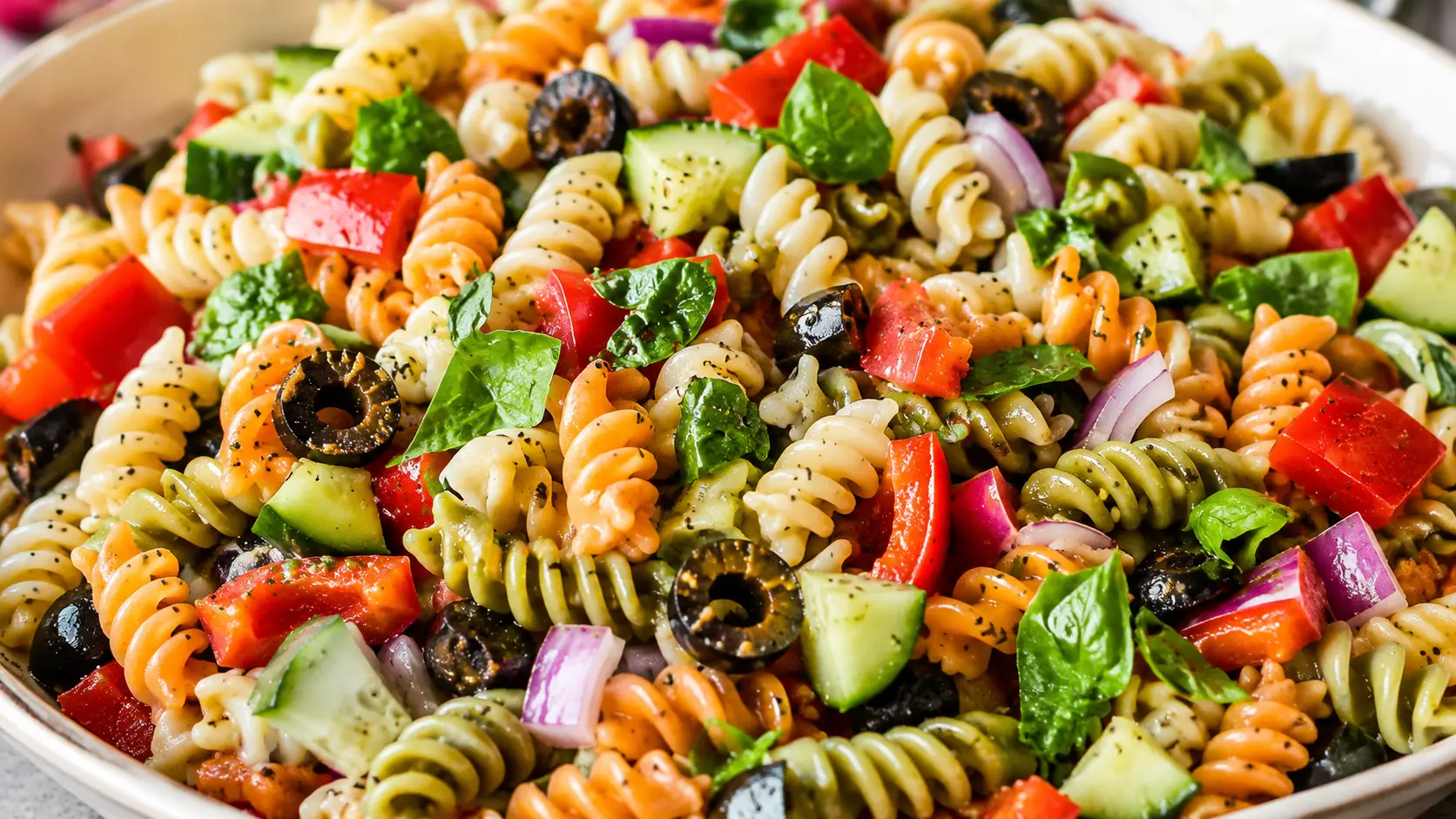
There’s a moment at every summer cookout, backyard picnic, or casual weeknight dinner when someone sets down a big bowl of chilled pasta and the whole table leans in. That dish is almost always an italian pasta salad and for good reason. It’s vibrant, satisfying, and packed with bold flavor that somehow gets even better the longer it sits. Whether you’re feeding a hungry crowd on a Saturday afternoon or packing lunches for the week ahead, this is the kind of dish that earns a permanent spot in your warm-weather rotation.
This guide walks you through everything you need to know, from understanding why this dish works so well, to building the perfect ingredient lineup, to nailing an easy italian pasta salad recipe that comes together without any stress. Let’s dig in.
Table of Contents
Italian Pasta Salad
Why Italian Pasta Salad Fits Busy Summer Cooking
Summer cooking has its own set of rules. Kitchens get hot, schedules get packed, and nobody wants to spend an hour hovering over the stove just to put dinner on the table. That’s exactly where a great italian pasta salad earns its place.
A No-Fuss Chilled Dish with Big Flavor
The beauty of this dish is in how little effort it actually demands. You boil a pot of pasta, chop a handful of fresh vegetables, toss everything together with a punchy dressing, and let the refrigerator do the rest of the work. There’s no oven involved, no last-minute timing to stress over, and no need to serve it piping hot.
That makes it ideal for warm weather days when the last thing you want is another steaming dish coming out of the kitchen. It’s ready when you are, it travels well, and it holds up for days in the fridge without losing its appeal.
What surprises a lot of people is how much flavor you actually get from such a simple process. The combination of briny olives, tangy pepperoncini, creamy mozzarella, savory salami, and a zesty vinaigrette creates something that feels complex and satisfying without requiring any special technique. It’s confident cooking made accessible.
Why It Tastes Even Better After Resting
Here’s something worth knowing before you make this for the first time: the italian pasta salad you taste right after tossing it together is not the italian pasta salad you’ll taste after it’s had a few hours in the refrigerator.
Chilling time isn’t just for cooling things down. It’s when the real flavor development happens. As the pasta sits, it absorbs the dressing slowly and evenly. The herbs bloom, the garlic mellows, the vinegar softens into the oil, and all the separate components start speaking the same flavor language.
A salad that tasted a little sharp or a little underdressed when first mixed will taste balanced, layered, and deeply savory after an hour or two in the fridge. Overnight is even better. This is why so many cooks make their italian pasta salad a day ahead on purpose not just for convenience, but because it genuinely tastes better that way.
PrintItalian Pasta Salad
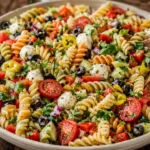
A fresh chilled pasta salad with rotini, crisp vegetables, mozzarella pearls, herbs, Parmesan, and a lively homemade dressing.
- Prep Time: 20 minutes
- Chill Time: 1 hour
- Cook Time: 10 minutes
- Total Time: 1 hour 30 minutes
- Yield: 6 servings 1x
- Category: Side Dish
- Method: Boiled, Tossed, Chilled
- Cuisine: Italian-American
- Diet: Vegetarian
Ingredients
- 1 pound rotini pasta
- 1 cup cherry tomatoes halved
- 1 cup mini mozzarella balls
- 1/2 cup black olives sliced
- 1/2 cup pepperoncini sliced
- 1/2 cup salami chopped
- 1/4 cup red onion finely chopped
- 1/4 cup fresh parsley chopped
- 1/4 cup fresh basil chopped
- 1/2 cup cucumber diced
For the dressing:
- 3/4 cup olive oil
- 1/4 cup vinegar
- 2 cloves garlic minced
- 1 teaspoon dried italian herbs
- 1/2 teaspoon salt
- 1/4 teaspoon black pepper
Instructions
- Bring a large pot of salted water to a boil. Cook the rotini until tender with a pleasant bite.
- Drain the pasta, rinse it briefly under cool water, and shake away extra water.
- Add olive oil, apple cider vinegar, garlic, mustard, oregano, salt, pepper, and sugar to a jar. Close the lid and shake well.
- Place cooled pasta, tomatoes, cucumber, bell pepper, red onion, olives, pepperoncini, mozzarella, Parmesan, basil, and parsley in a large bowl.
- Pour most of the dressing over the salad and toss gently until coated.
- Cover and chill for one hour. Toss again before serving and add reserved dressing as needed.
Notes
Use rotini, fusilli, or farfalle for a shape that catches dressing well.
Reserve a few tablespoons of dressing for the final toss.
Prepare the salad several hours ahead or refrigerate it overnight.
Store leftovers in a sealed container in the refrigerator for up to four days.
Add white beans or grilled chicken for a heartier meal.
Nutrition
- Serving Size: 1/8 of recipe
- Calories: 410
- Sugar: 4 g
- Sodium: 560 mg
- Fat: 24 g
- Saturated Fat: 7 g
- Unsaturated Fat: 16 g
- Trans Fat: 0 g
- Carbohydrates: 37 g
- Fiber: 3 g
- Protein: 13 g
- Cholesterol: 20 mg
What Goes in the Perfect Pasta Salad Bowl
Getting the ingredient mix right is what separates a forgettable italian pasta salad from one that disappears within minutes at the table. Each component plays a role, and balance is everything.
Short Pasta Shapes That Carry Dressing Well
Before you even think about toppings or dressing, the pasta itself is your foundation, and not every shape performs equally well in a cold salad.
Long pasta like spaghetti or linguine creates clumps and doesn’t hold onto dressing or small mix-ins. What you need is a short, textured shape that can trap flavor in every crevice. Here are the top picks:
Rotini — The spiral shape is a dressing magnet. Every twist holds liquid and bits of herbs or seasoning, which means more flavor in every single forkful. This is the most popular choice for a reason.
Fusilli — Similar in concept to rotini with a slightly tighter, rounder coil. Works beautifully and offers a slightly different texture.
Farfalle — Bow-tie pasta brings a fun visual element and a satisfying chew. The flat center and ruffled edges hold dressing in two different ways.
Penne — The hollow tube catches pools of dressing inside, making each bite especially flavorful. A solid backup when the others aren’t on hand.
Whichever shape you choose, the goal is texture and surface area. You want the dressing to cling, not puddle at the bottom of the bowl.
Fresh, Briny, and Creamy Ingredients That Balance Each Bite
A great pasta salad with italian dressing needs more than just pasta. The supporting cast is what gives this dish its personality, and the best versions hit all the right notes: something bright, something briny, something creamy, and something with a little bite.
Cherry Tomatoes — Halved tomatoes bring sweetness and a burst of fresh juice. They also add color that makes the whole bowl look lively and inviting. Use them ripe for the best flavor payoff.
Mini Mozzarella Balls (Ciliegine) — These little bites of fresh mozzarella add creaminess that softens the tangy elements in the dressing. They’re mild enough not to overpower anything else, but satisfying enough to make the salad feel substantial.
Black or Kalamata Olives — Olives bring a salty, slightly bitter depth that makes the whole salad more interesting. Slice them for even distribution so every serving gets a little of that briny punch.
Pepperoncini — Sliced pepperoncini add a tangy, mildly spicy kick that cuts through the richness of the mozzarella and salami. Don’t skip them. They’re one of the things that make an italian pasta salad taste distinctly Italian rather than generic.
Salami — Thinly sliced or diced salami adds a savory, slightly fatty richness that makes this feel like a real meal rather than a side dish. It’s the heartiness anchor of the whole bowl.
Red Onion — Finely chopped red onion adds a sharp, peppery edge. A little goes a long way, but the flavor contrast it provides is essential.
Cucumber — Diced cucumber adds freshness and crunch. It keeps things light and makes the salad feel cool even before it goes into the fridge.
Fresh Herbs — A mix of chopped flat-leaf parsley and fresh basil at the finish lifts the whole dish. Don’t substitute dried herbs here; fresh makes a noticeable difference.
Easy Italian Pasta Salad Recipe Instructions
This italian pasta salad recipe is designed to be approachable, reliable, and genuinely delicious. Follow these steps and you’ll have a bowl worth bragging about.
Ingredients (serves 6):
- 1 pound rotini pasta
- 1 cup cherry tomatoes, halved
- 1 cup mini mozzarella balls
- ½ cup black olives, sliced
- ½ cup pepperoncini, sliced
- ½ cup salami, chopped or sliced
- ¼ cup red onion, finely diced
- ½ cup cucumber, diced
- ¼ cup fresh parsley, roughly chopped
- ¼ cup fresh basil, torn
For the Dressing:
- ¾ cup olive oil
- ¼ cup red wine vinegar
- 2 garlic cloves, minced
- 1 teaspoon dried Italian seasoning
- ½ teaspoon salt
- ¼ teaspoon black pepper
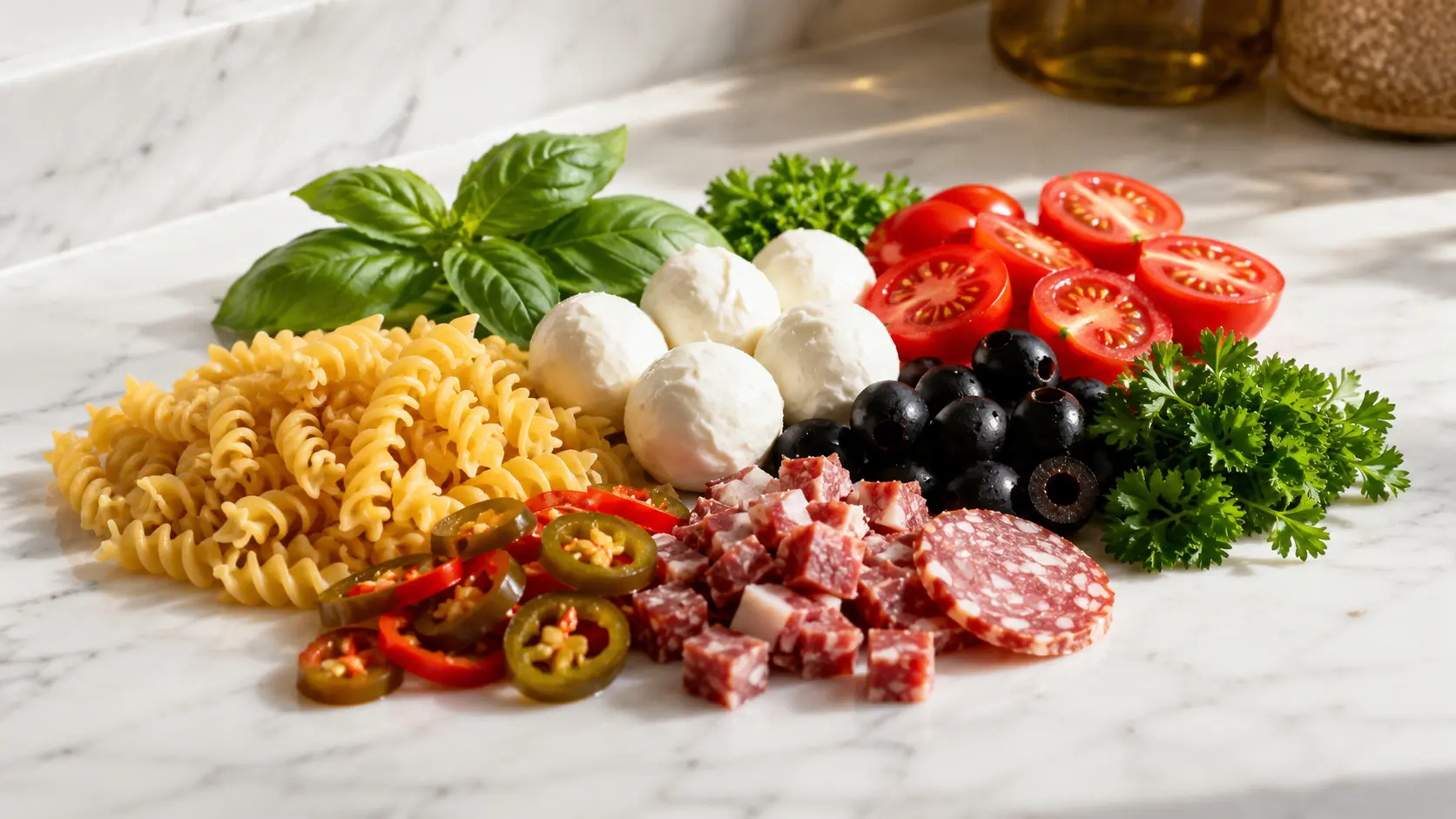
Step-by-Step Cooking, Cooling, Mixing, and Chilling
Step 1 — Cook the Pasta: Bring a large pot of generously salted water to a rolling boil. Add the rotini and cook until just past al dente you want it tender but not mushy, since it will continue to soften slightly as it chills and absorbs dressing. Check the package directions and taste a minute before the suggested time.
Step 2 — Cool the Pasta Quickly: Drain the pasta through a colander and rinse immediately under cold running water. Toss it under the stream until it’s fully cooled. This stops the cooking process, washes off excess starch, and brings the temperature down so it doesn’t wilt the fresh vegetables when combined. Shake off as much excess water as possible, then spread the pasta on a clean baking sheet for a few minutes if you want it extra dry.
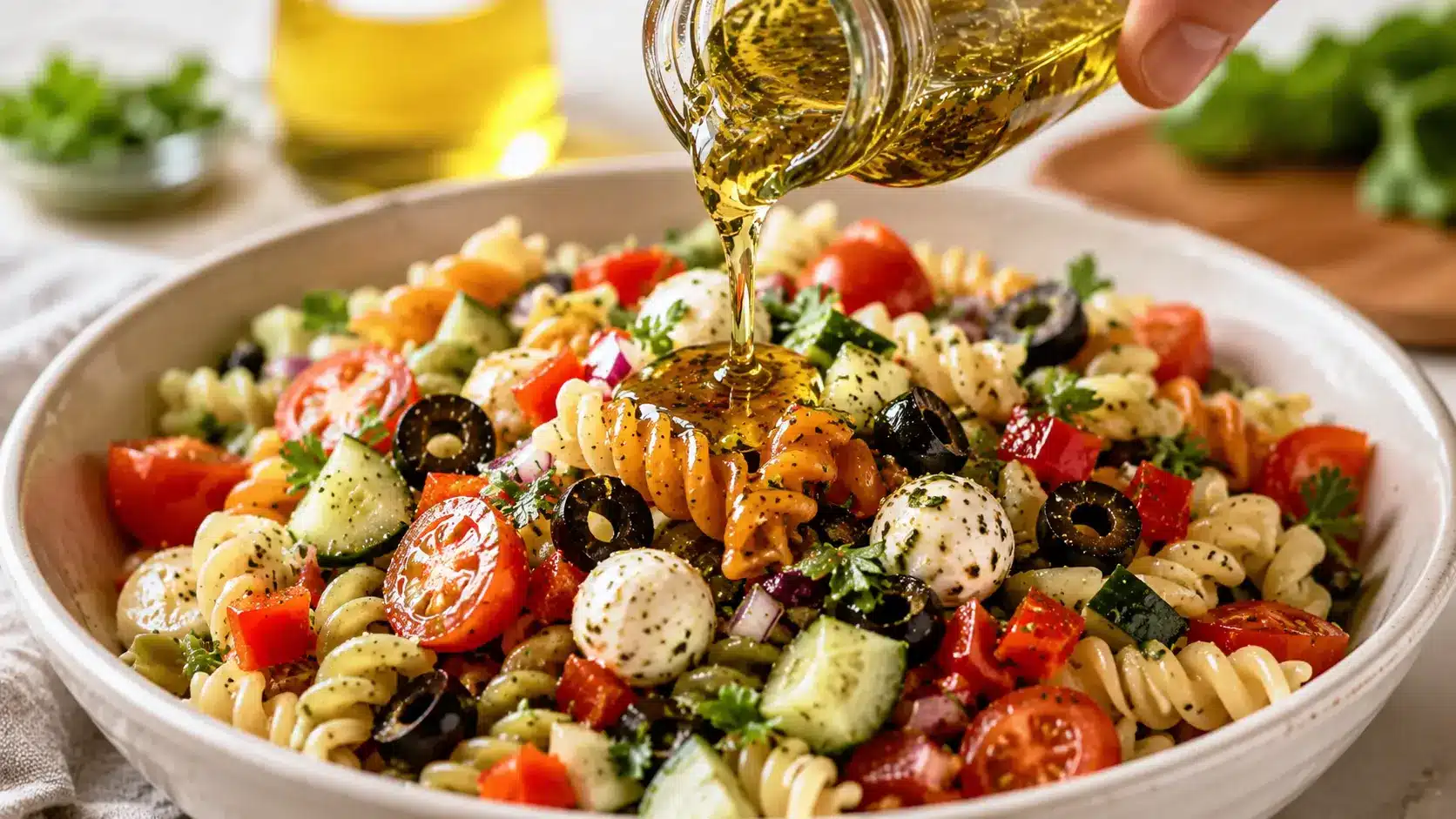
Step 3 — Make the Dressing: In a small bowl or a jar with a lid, combine the olive oil, red wine vinegar, minced garlic, dried Italian seasoning, salt, and pepper. Whisk vigorously or shake until emulsified. Taste and adjust if it needs more acidity, add a splash more vinegar; if it’s too sharp, add a little extra olive oil.
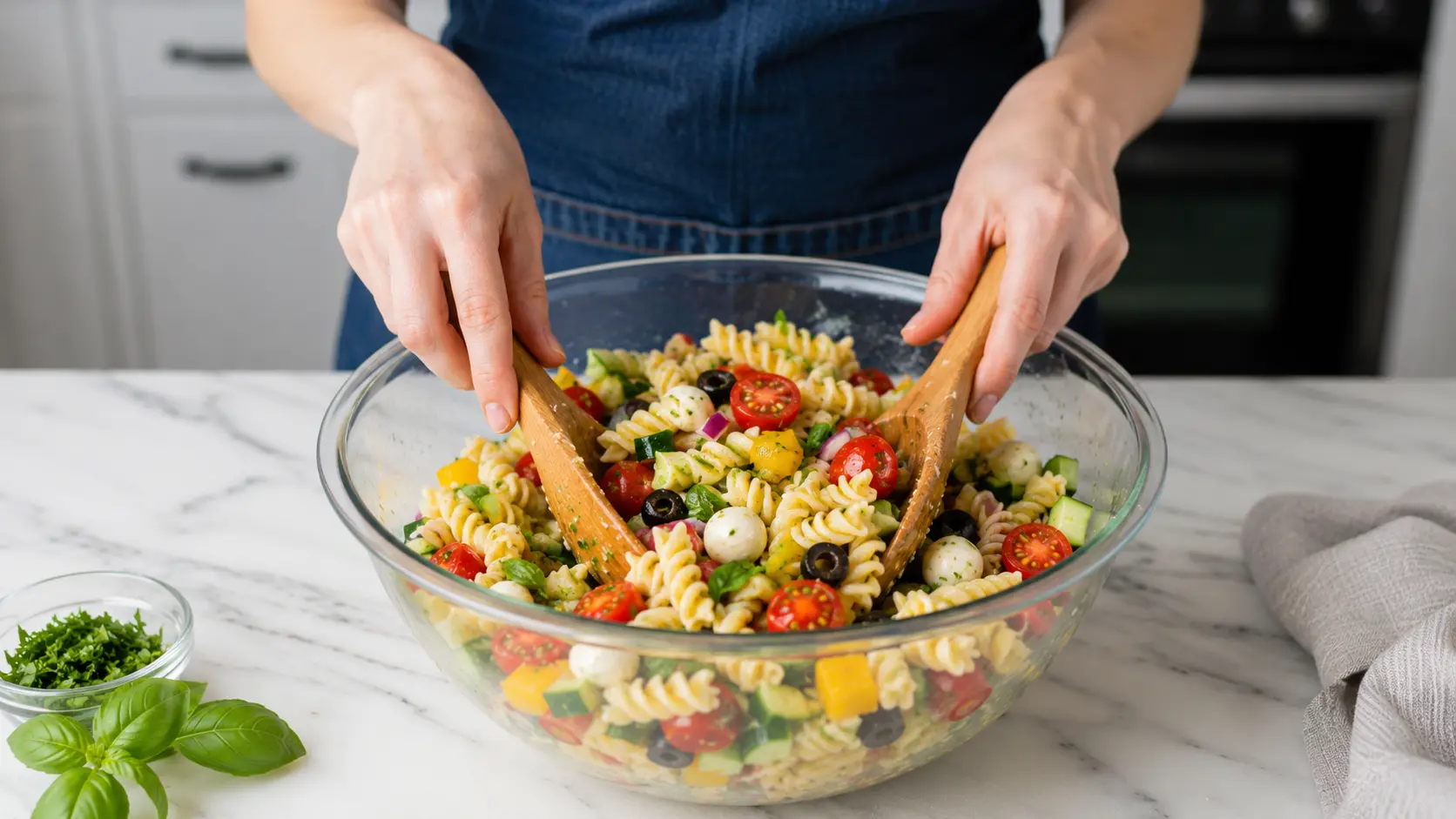
Step 4 — Combine Everything: Transfer the cooled pasta to a large mixing bowl. Add the cherry tomatoes, mozzarella, olives, pepperoncini, salami, red onion, and cucumber. Pour about three-quarters of the dressing over the top and toss thoroughly, making sure every piece of pasta is well coated.
Step 5 — Add Fresh Herbs and Chill: Scatter the chopped parsley and torn basil over the top and toss once more. Cover the bowl tightly with plastic wrap or transfer to an airtight container. Refrigerate for at least one hour before serving. Two hours is better. If you have the patience, overnight is best.
Step 6 — Finish and Serve: Right before serving, give the salad a good toss. Taste it. Pasta absorbs dressing as it sits, so it may need the reserved dressing at this point. Drizzle it in, toss again, and adjust salt if needed. Serve cold.
You’ll want to also check out our guide on how to cook pasta properly getting the texture right at this stage is the single most important step in the entire recipe.
Common Texture Mistakes and Simple Fixes
Even with a straightforward recipe, a few common missteps can affect the final result. Here’s what to watch for and how to recover.
Mushy pasta — This happens when the pasta is overcooked before cooling. Aim for just-tender rather than fully soft when you drain it. The pasta will absorb a small amount of dressing and soften slightly more while chilling, so pulling it just before peak doneness gives you a better final texture.
Watery salad — If your cucumber or tomatoes release too much liquid, the dressing gets diluted and the salad tastes flat. Pat tomato halves lightly with a paper towel before adding them, and make sure the cooled pasta is well drained before mixing.
Underdressed salad after chilling — Pasta is absorptive, and a salad that looks perfectly dressed when first mixed can seem dry an hour later. Always hold back a small amount of dressing to add right before serving. This fix is simple and makes a big difference.
Clumped pasta — If the pasta isn’t tossed immediately after draining and cooling, it can stick together. A light toss with a small drizzle of olive oil right after rinsing prevents this and keeps the texture loose and easy to work with.
Dull flavor — If everything tastes flat, it’s almost always a seasoning issue. Add a pinch of salt, a small squeeze of lemon, or a splash of the brine from the pepperoncini jar. That little hit of acid and salt wakes the whole dish up immediately.
Make-Ahead Storage and Serving Tips
One of the best things about this dish is how well it cooperates with planning ahead. A little preparation goes a long way when you’re hosting or meal prepping for a busy week.
Packing Pasta Salad for Lunches or Gatherings
For lunches, portion the salad into individual airtight containers right after chilling. Each container will stay fresh and ready to grab from the fridge for up to four days. If you’re packing for children or carrying it in a bag without a cooler, consider keeping the dressing in a small separate container and adding it right before eating to prevent sogginess.
For outdoor gatherings, potlucks, or cookouts, transfer the salad to a large serving bowl and keep it covered until right before the food is set out. If it’ll be sitting outdoors for more than two hours, nestle the bowl in a larger container filled with ice to keep it safely chilled. This is especially important on hot days.
For longer trips or buffets where the salad needs to hold for a while, make it slightly underdressed initially. The pasta will absorb what’s there, and you can drizzle fresh dressing over the top just before service to revive it and make it look freshly made.
If you’re taking this to a potluck alongside other dishes maybe something like an Italian grinder pasta salad variation or a Cajun crab pasta salad for contrast prepare everything the night before and store separately until serving time.
Keeping the Salad Fresh, Lively, and Ready to Serve
The biggest enemy of leftover pasta salad is dryness. After a day in the fridge, even a beautifully made salad can look a bit tired. The fix is simple: a fresh drizzle of good olive oil and a splash of red wine vinegar, followed by a thorough toss and a quick taste for seasoning, will revive it completely.
For storage beyond three to four days, the fresh herbs are the first thing to suffer. If you know you’re making a large batch for the week, hold the parsley and basil separate and add them fresh each time you serve from the batch. Everything else the pasta, vegetables, salami, olives, and mozzarella holds up beautifully in an airtight container for four days.
Avoid freezing pasta salad. The pasta turns mealy and the vegetables lose all their texture after thawing. This is a dish meant for the refrigerator, not the freezer.
One more tip: always serve the salad cold, straight from the fridge. Room temperature pasta salad loses some of its refreshing quality and the dressing can taste a bit heavy. That chill is part of what makes this dish so satisfying in warm weather.
Fresh vegetable pasta salads can make a flavorful addition to a balanced meal plan. The Mayo Clinic shares a comparable version that pairs pasta with colorful vegetables and a straightforward cooking method.
Frequently Asked Questions
How to make pasta salad?
Cook short pasta like rotini until just tender, then rinse with cold water to cool it down completely. While the pasta drains, chop your vegetables, slice your meats and olives, and whisk together a simple dressing of olive oil, vinegar, garlic, and herbs. Combine everything in a large bowl, pour the dressing over, and toss until well coated. Chill for at least one hour before serving, and give it a fresh toss with a little extra dressing just before it hits the table.
How much Italian dressing for pasta salad?
A reliable starting point for pasta salad with italian dressing is about three-quarters of a cup of dressing per pound of dry pasta. That said, it’s better to add the dressing in stages start with a bit less, toss, taste, and add more as needed. Always keep a small amount in reserve to add right before serving, since pasta continues to absorb dressing as it chills and the salad often needs a refresh before it goes out.
What is the best pasta for Italian pasta salad?
Rotini is the top choice, and the reason comes down to surface area. The spiral shape catches and holds dressing, small bits of herbs, and seasoning in every groove. Fusilli, farfalle, and penne are all excellent alternatives for the same reason they have texture and structure that long, smooth pasta simply can’t match in a cold preparation.
What ingredients go in an Italian pasta salad?
The classic lineup includes rotini pasta, cherry tomatoes, fresh mozzarella, sliced black olives, pepperoncini, salami, red onion, cucumber, fresh parsley, and fresh basil, all dressed with a homemade or quality store-bought Italian vinaigrette. From there, the recipe is flexible. Provolone, artichoke hearts, roasted red peppers, sun-dried tomatoes, or even a handful of arugula can all be added depending on your taste and what’s in the fridge.
Can I make Italian pasta salad ahead of time?
Absolutely and it’s actually encouraged. Making this dish a day ahead gives the flavors time to fully develop and meld together, which produces a noticeably richer and more satisfying result than serving it freshly made. Store it in an airtight container in the refrigerator, and plan to refresh it with a small drizzle of dressing and a good toss before serving. It keeps well for up to four days.
Conclusion: A Reliable Recipe Worth Coming Back To All Summer Long
Italian pasta salad is one of those recipes that earns its place not by being trendy or complicated, but by being consistently good. It’s the dish that fits every occasion the one you make on Sunday afternoon and eat from all week, the one you bring to every cookout and watch disappear, the one that actually gets better in the fridge overnight.
What makes it worth mastering is that once you understand the basics the right pasta shape, the balance of ingredients, the importance of a well-made dressing, and the value of chilling time you can make it your own. Add your favorite vegetables. Try a creamy version. Toss in grilled chicken to turn it into a full meal. Build a deli-inspired twist like an Italian grinder pasta salad loaded with cured meats and giardiniera. Or keep it simple and classic, which honestly works just as well.
This is warm-weather cooking at its best: minimal effort, maximum flavor, and something on the table that people are genuinely excited to eat. Make it once, and it’ll become one of your most reliable recipes the kind you don’t even need to think too hard about because your hands already know what to do.
Follow me on Pinterest for daily new recipes.